Cherwell Larder: Thursdays 11am, and Fridays at 4pm while supplies last at WISH, 4 The Parade, Kidlington. Ask to join our WhatsApp group for regular updates on additional distributions.
The Carbon Cost of AI – What Consumers Need to Know
25 July 2025 Update:
Since originally publishing this article we have learned about two ways you can avoid using AI in search. When using Google, you will find a banner of options above the search results: All, Images, Videos, News etc. Click on “More” from the list to reveal a drop-down menu and choose “Web”. All search results thereafter will include only websites and no AI results. Another option for conducting Google searches without triggering AI results is to visit UDM14.com, a search portal which routes searches through Google but with special code that removes what the creators allude to being “excrement” that isn’t desired. In other words, the portal will provide Google search results with not only AI removed but also various sponsored content stripped from the results.
Web users may also be interested in searching for images but avoiding AI-generated image content, as recommended in our article below. One way to do so is to perform the image search using Duck Duck Go, a search engine focused on user privacy. When performing an image search on Duck Duck Go, there is a toggle switch called “AI images” which you can set to “hide”.
Takeaways
This is one of our lengthier pieces, so here’s a quick synopsis up front:
- Like driving, flying, or eating red meat, using AI has a Carbon Cost—emissions of greenhouse gases from the electricity that powers your queries.
- AI electricity consumption could triple in the U.S. in just the next three years.
- This increased energy demand risks undermining global efforts to reduce greenhouse gas emissions and mitigate climate change.
- The Carbon Cost of AI varies: asking a chatbot a question has only a small effect, but using AI to generate a video as short as 5 seconds has a Carbon Cost similar to driving a mile.
- As AI videos and agentic AI become more common, they could quickly become a significant new source of emissions.
Why We’re Talking About AI’s Carbon Footprint
On 9 July 2025, the day before this article’s publication, NVIDIA, a maker of computer chips, became the first company ever to be valued at $4 trillion U.S. Dollars (£ 2.9 trillion). By comparison, the entire UK economy in 2024 generated $3.4 trillion (approximately £ 2.5 trillion) in goods and services. NVIDIA’s place as the most valuable company of all time hinges on market assumptions about the explosive growth of artificial intelligence (AI). The company makes graphical processing units (GPUs), the specialized chips needed for AI.
Suddenly, AI use is everywhere. In fact, we admit it: We used AI to help with some of the maths calculations and edits of this very article. Those AI queries used about the same electricity as running a standard 1,000-watt microwave for 10 seconds, a comparison we will explore in more depth. Was our use of AI ok? What is AI’s carbon footprint? What can we, as consumers, do to use AI responsibly if we care about the climate and the environment? Let’s dive in.
Using AI to help write this article used about the same electricity as running a microwave for 10 seconds.
The societal role of AI is continually expanding. But most critical discussions of AI focus on social or economic implications. Issues such as whether AI disrupts classrooms, atrophies human skills, or replaces jobs have been well-covered elsewhere. Far fewer people ask questions about the ecological sustainability of AI:
- How does AI contribute to the creation of e-waste?
- How much fresh water does AI use?
- What does AI’s growing demand for electricity mean for climate change?
This article focuses on the last of those questions, with an aim to help you decide when and how to use AI thoughtfully.
What does AI’s growing power demand mean for climate change?
The Reality of AI Today
For decades, AI has stirred imaginations with sci-fi visions of computers that think like humans: HAL 9000 in 2001: A Space Odyssey, C-3PO from Star Wars, and the Scarlett Johansson-voiced operating system in Her. But the current state of AI is far less fanciful: today’s “AI” label applies to programs that can mimic narrow human skills—like writing, drawing, or organizing text.
Chatbots, the largest category of AI today, can answer questions in natural language, search the web, handle spreadsheet formulas, perform complex maths, or edit documents. Other AI tools generate images or videos from a simple text description, letting you produce photos, “art,” and video content without any special skills.

What’s coming next is agentic AI, where programs can complete complex tasks, such as those of a personal assistant, like a souped-up Siri or Alexa. If these “always-on” AI agents gain millions of users (ChatGPT already offers a test version of agentic AI in its $200-per-month “pro” plan), they could make the energy demands of today’s chatbots look tiny by comparison.
Meet the Big AI Players
You’re likely familiar with some of the key companies shaping this landscape:
- OpenAI makes ChatGPT (written/spoken questions), DALL·E (images), and Sora (videos).
- Anthropic was founded by ex-OpenAI employees, with funding from Amazon. They created the Claude chatbot, which some claim outperforms ChatGPT.
- Google has Gemini, its own chatbot integrated into Google Search, Gmail, and Docs. Google also has Veo for AI-generated videos.
- Meta, the parent company of Facebook and Instagram, is racing to hire AI experts and launch new tools, although industry experts say its current technology lags.
- Microsoft offers Copilot, an AI chatbot integrated into Office 365 and Teams.
These tools are quickly becoming omnipresent: ChatGPT is now the fifth most-visited website in the world, handling over 1 billion queries daily, and major tech companies are embedding AI across their product lines. Type a question into Google, and Gemini AI will suggest an answer before traditional search links even appear, even if you don’t ask it to. The use of AI is becoming a hard-to-avoid default.
AI’s Insatiable Power Appetite and Global Footprint
AI isn’t free, at least not for the planet. Each chatbot answer, image, or video requires significant electricity. When multiplied by the huge volumes of queries, this energy use becomes enormous. And since many data centers often rely on fossil fuels, every AI request risks adding climate-changing greenhouse gases to our atmosphere. We all need to know more about the Carbon Cost of using AI, just like we think about the emissions from driving or flying or eating a cheeseburger.
So far, because most of the major AI companies are based in the U.S., data on power usage primarily comes from U.S. sources. However, AI’s emissions are inherently global: your chatbot request could travel to a data center anywhere in the world, and if that data center is powered by coal or natural gas, the emissions become part of the global atmosphere.
Everyone’s AI use affects everyone, everywhere.
Data centers are being built everywhere because locating them near users is crucial to minimize latency, the time it takes an AI to send a response to users. As part of efforts to help the UK boost its own AI business, the current Labour government has announced plans to invest £14 billion in new UK data centers.
How We Measured AI’s Carbon Cost
A big obstacle in researching AI emissions is that none of the big AI companies publish comprehensive electricity consumption data, likely because they don’t want bad press. Only OpenAI has released limited figures on the average amount of power required to answer a single question with ChatGPT.
None of these AI companies publish comprehensive electricity consumption data, likely because they don’t want bad press
We therefore turned to OpenAI’s data and other estimates from academic researchers (see endnote) to gain a rough sense of AI’s electricity usage. The estimates are usually given in watts, watt-hours, or joules—units that don’t mean much to most people. That’s why we converted all those figures into what we hope is a more relatable unit: the microwave-second. In other words, it’s the electricity required to run a standard 1,000-watt microwave oven for one second.
Why Use the Microwave as Our Benchmark?
We chose the microwave because:
- It’s often the most power-hungry, yet commonly used, appliance in a home, equivalent to running a window air conditioner. Running a microwave for 36 seconds uses as much power as fully charging a smartphone or keeping a single LED lightbulb on for an hour.
- People intuitively understand microwave time: running it for a few minutes a day feels normal; running it for an entire day would seem excessive.
- We aren’t “anti-microwave.” Cherwell Collective even recommends using microwaves in our article Five Principles for Climatarian Living, because microwaves can cook food faster and more efficiently than ovens or stovetops, saving energy overall. Just as we can all use microwaves responsibly, we can also utilize AI while being mindful of our planet’s resources.
Finally, we were able to derive a useful emissions comparison: Based on the average emissions for generating electricity in the UK, the carbon emitted by running a microwave in the UK for one hour is roughly equivalent to driving an average UK petrol car one mile. These car mile equivalents are how Cherwell Collective has historically explained the Carbon Cost of food: For example, eating one McDonald’s-size cheeseburger has a Carbon Cost equivalent to driving a car 10 miles.
Breaking Down AI’s Carbon Costs
With our “microwave-second” in mind, here’s the equivalent energy used for various AI tasks:
Chatbot text prompts:
- ~0.1 to 1 microwave-seconds per question or prompt, depending on the complexity.
- You’d have to ask ChatGPT roughly 3,600 average questions to have the same Carbon Cost as driving one mile – so for most people, the use of text-based questions for AI is not a significant part of one’s carbon footprint.
AI image generation (standard 1024×1024 pixels):
- ~6 microwave-seconds per image from a basic AI image generator.
- Higher-resolution images could use the electric equivalent of 1 minute of microwave time.
Short AI video clips:
- Producing standard-definition 5-second clips can consume the same electricity as about an hour of microwave time—the same emissions as driving one mile.
- As AI video generation becomes more ubiquitous, a hobbyist generating several videos a day could easily generate the same emissions as a typical daily commute by car.
Professionally edited 2-minute AI videos:
- A Wall Street Journal reporter recently tested what it would take to make a professional-looking 2-minute video with AI.
- She needed to generate 1,000 eight-second clips (because many were of poor quality or inconsistent) to piece together her video.
- This project used as much electricity as running a microwave continuously for 4.5 days—with a Carbon Cost comparable to driving 108 miles.
The Coming Wave of AI Video
Here’s the real danger: AI-generated video content is exploding. Platforms like TikTok and Instagram are already flooded with AI-created videos (even if you can’t always spot them). Meanwhile, Meta has explicitly outlined a plan for AI-driven ads, allowing small businesses to generate entire ads automatically, from text to images to video, at a low cost. And remember: 97% of Meta’s revenue comes from ads, so it has every incentive to make AI-generated video widely available.
Combine this with the vision for agentic AI—virtual assistants that are always on, constantly generating and analyzing content—and AI power consumption could far exceed what we see today with text-only chatbots.
How Data Centers Drive AI Emissions
The soaring valuation of NVIDIA comes down to rising GPU sales for large AI data centers (server farms), where millions of GPUs are co-located. Not only does each GPU consume electricity, but all that hardware generates heat. Cooling these GPUs requires even more electricity for air conditioning.
The Scale of AI Infrastructure
Consider one example of data center growth: Amazon is currently building a 1,200-acre data center complex in the U.S. state of Indiana to house Anthropic’s AI system – that’s an area of land 2 miles long by 1 mile wide that will be covered by 30 enormous buildings filled with GPUs. The local power utility is adding 2.2 gigawatts (GW) of new generating capacity specifically for this data center, which is nearly as much power as it currently provides to all of Indiana’s 7 million residents. This 2.2 GW is roughly equivalent to:
- 2 nuclear reactors, or
- 2 large coal-fired power plants, or
- 3 big natural gas turbines, or
- 1.5 times the full output of Dinorwig Power Station in Wales, the UK’s largest hydropower facility.
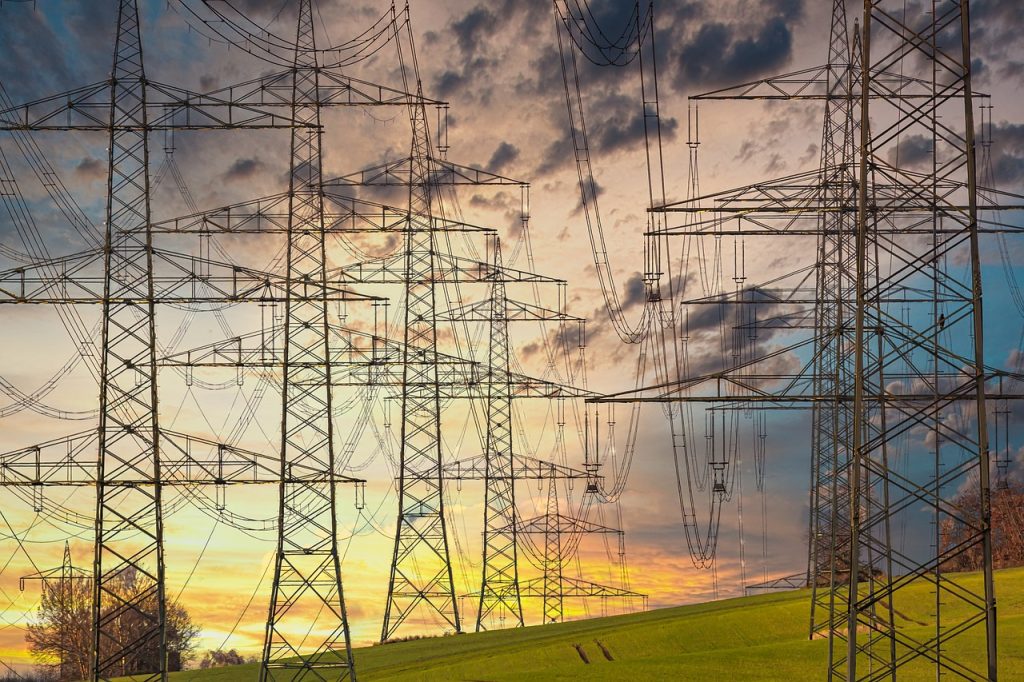
And that’s just one data center project, only one of four being built in the U.S. by Amazon. All the major AI players are establishing numerous other centers, both in the U.S. and abroad. Meanwhile, the U.S. Stargate initiative, a planned $500 billion data center boom, could require up to 50 GW of new electricity generation—roughly the power of 50 coal plants or 50 nuclear reactors.
How Fast AI Power Use Is Growing
This is not some future issue. The U.S. Department of Energy reports that from 2017 to 2023, U.S. data center electricity consumption doubled, reaching 4.4% of the nation’s total power use. It also estimates that by 2028, data centers’ share will nearly triple again, consuming 12% of all U.S. electricity — a staggering increase in just a few years.
Why Power Source Matters
Data centers require stable, 24/7 electricity, which makes it challenging to rely solely on variable renewable energy sources, such as wind or solar. This reality means data centers often depend on coal or natural gas, giving their electricity a carbon intensity 48% higher than the U.S. average. Three-quarters of the new power plants for the Anthropic data center in Indiana will be fueled by natural gas.
Could Nuclear Power Help?
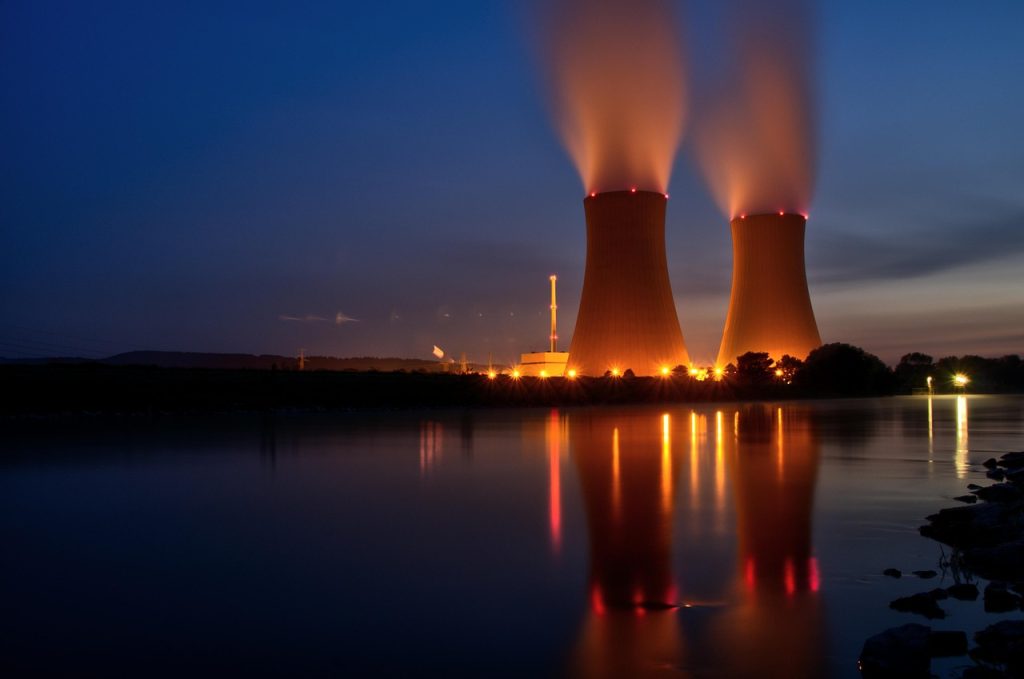
The climate community is divided on nuclear power: some oppose it entirely due to the safety risks, while others argue it’s essential to meet climate goals without relying on fossil fuels. Some American AI giants see nuclear as a key part of low-carbon AI services:
- Microsoft is investing billions in partnership with Constellation Energy to reopen a closed nuclear reactor in Pennsylvania to fuel its new data centers.
- The governor of New York recently announced her support for building a new nuclear plant, citing the need to supply power to AI data centers without raising emissions.
What Should You Do?
AI is here, and more AI is coming. Even low-emission uses of AI add up when multiplied against the huge volume of users. When you consider that the world completes around 3.1 trillion Google searches per year, the automatic integration of AI into those searches generates over 860 MILLION extra car miles of potential emissions.
In the world of AI usage, should we all do the equivalent of “going vegan” and simply refuse to use it, the way some refuse to consume animal-based food products? Many people would find an AI-free lifestyle to be fairly challenging, as even entering a search into the Google search tool today automatically activates the company’s AI. What would be the “climatarian approach” to AI use – the equivalent of eating less red meat but not cutting it out of your diet entirely?
Here’s what we recommend:
What to do as a citizen
Push your local utility and elected officials to build more zero-carbon electricity sources, such as wind, solar, or nuclear, or even battery storage, which can help supply data centers with “green” electricity around the clock. We need them, not only for the growth of AI, but also for the increasing adoption of plug-in electric vehicles.
What do do as an AI user
Keep your AI use limited to low-power activities, like chatbot questions, text editing, or spreadsheet help. Use it to create images sparingly. Meanwhile:
- Avoid generating AI videos, which have outsized energy and carbon impacts.
- Limit consuming AI videos: if fewer people watch them, fewer will be created, reducing demand and emissions. When you see AI content, scroll past it.
As we learn more about the power consumption of AI, particularly as agentic AI becomes more common, we’ll keep you updated here at Our Collective Thoughts.
Sources & research for this article:
Meta Aims to Fully Automate Ad Creation Using AI, Wall Street Journal
https://www.wsj.com/tech/ai/meta-aims-to-fully-automate-ad-creation-using-ai-7d82e249
At Amazon’s Biggest Data Center, Everything Is Supersized for A.I., New York Times
https://www.nytimes.com/2025/06/24/technology/amazon-ai-data-centers.html
We Did the Math On AI’s Energy Footprint: MIT Technology Review:
https://www.technologyreview.com/2025/05/20/1116327/ai-energy-usage-climate-footprint-big-tech
How Much Energy Does Your AI Prompt Use? I went to a Data Center to Find Out, Wall Street Journal:
https://www.wsj.com/tech/ai/ai-prompt-video-energy-electricity-use-046766d6
Three Mile Island nuclear plant to help power Microsoft’s data-center needs, NBC News,
DOE Releases New Report Evaluating Increase in Electricity Demand from Data Centers, United States Department of Energy:
Online search market worldwide – statistics & facts, Statista
https://www.statista.com/topics/1710/search-engine-usage/#topicOverview
34 Eye-Opening Google Search Statistics for 2025, Semrush
https://www.semrush.com/blog/google-search-statistics
How much energy will AI really consume? The Good, the bad, and the unknown. Nature.
https://www.nature.com/articles/d41586-025-00616-z
The Green Dilemma: Can AI fulfill Its Potential Without Harming the Environment? Earth.Org
https://earth.org/the-green-dilemma-can-ai-fulfil-its-potential-without-harming-the-environment/
Research Notes:
To determine how much electricity is used for AI tasks, we used a mix of estimates shared from OpenAI as well as from University of Michigan researchers Jae-Won Chung and Mosharaf Chowdhury, and from Dr. Sasha Luccioni who works on climate and AI at Hugging Face. Luccioni has written a lot about this space, including a quirky article about how just saying “thank you” to an AI chatbot uses the same energy as running a small LED light bulb for 3 minutes (or a microwave for one second).
Based on UK data from Nowtricity, greenhouse gas emissions in the UK are approximately 200 grams per kilowatt-hour of electricity consumed (the same as running a microwave for one hour). 200 grams of CO2 equivalents roughly the same greenhouse gas emissions as driving a typical petrol car in the UK one mile. So 1 kilowatt hour = 1 hour of microwave use = 1 car mile of emissions which is roughly = to making one 5-second AI video.
Meanwhile, running a microwave for one second, akin to asking ChatGPT one question, is similar to the greenhouse gas output of driving 18 inches.

Michael Hines
Director of Content & Research
Michael Hines is a New York City-based freelance contractor who researches and writes on sustainability issues and the Carbon Cost of consumer behaviours. He is certified as Carbon Literate by the Carbon Literacy Project and has course certifications on climate change action, sustainable diets, e-waste reduction, and food waste from the UN Climate Change (UNCC) Learning Partnership. When not writing about sustainability, Mike also finds himself writing about media and entertainment, technology, finance, and healthcare for a variety of global companies.
More posts like this

If you can’t stand the heat, get out of the Opera festival
Braving a record-breaking heatwave, Cherwell Collective’s Climatarian Kitchen returned as the hospitality partner for the 2026 Waterperry Opera Festival. A combination of hamper and restaurant services totalled over 400 meals,…
 Dr. Emily Connally
25th August 2026

The Carbon Cost of Christmas: A 2025 Reflection on Celebrating More Sustainably
In 2023, Cherwell Collective published a four-part series exploring the Carbon Cost of Christmas. It was a closer look at how some of the UK’s most cherished festive traditions contribute…
 Michael Hines
13th December 2025

Applications Open for 2026 Sustainable Fashion Show
Apply to be a model, designer, or volunteer for the 2026 Sustainable Fashion Show at Blenheim Palace.
 Hailey Larson
14th November 2025
Jump to a section
Article contents